

We live in a world that never shuts up. Between the endless ping of phone notifications and the constant hum of city noise, our brains are always under siege. This digital overload keeps our nervous systems on high alert, leaving us stressed, exhausted, and desperate for a reset. If traditional meditation feels impossible because you cannot quiet your racing thoughts, you are not alone. That is exactly why so many people are turning to sound healing to pull their mind and body back into balance.
Far from a passing social media trend, this practice combines ancient tradition with modern neuroscience. By using specific frequencies, it bypasses your logical mind to trigger immediate, physical relaxation. It is a simple, natural way to finally unplug the noise and reclaim your inner calm.
Disclaimer: This article is for informational purposes only and does not substitute for professional medical advice, diagnosis, or treatment. Always consult your physician or a qualified healthcare provider before practicing sound therapy if you have underlying health conditions, cardiac pacemakers, or are pregnant.
What Is Sound Healing and How Does It Actually Work?
Sound-based relaxation practices utilize external acoustic vibrations to promote a sense of physiological balance.
At a neurobiological level, one proposed mechanism behind acoustic meditation involves auditory rhythm and brainwave entrainment [1]. Neural activity generates electrical patterns (brainwaves) that vary according to cognitive and emotional states. Research in neurologic music therapy demonstrates that when exposed to rhythmic, sustained acoustic frequencies such as those produced by singing bowls or gongs, neural networks and motor systems entrain and synchronize with external auditory stimuli [1].

This process can be compared to two pendulums gradually swinging in unison. By presenting the nervous system with steady, harmonious sound patterns, brainwave activity can transition from active alertness toward states associated with deep relaxation and meditation [1, 2].
The Scientific Benefits of Sound Meditation for the Modern Mind
While the experience of a sound bath can feel deeply spiritual, the physical benefits are thoroughly backed by modern research. Engaging in regular sound meditation is a powerful way to counteract the daily damage caused by chronic stress.
When you immerse yourself in a sound healing session, your body undergoes several measurable physiological changes:
1. Reduces cortisol levels: Studies show that therapeutic sound environments significantly drop the production of cortisol, the primary stress hormone that keeps you feeling anxious and wired.
2. Activates the parasympathetic nervous system: The soothing frequencies stimulate the vagus nerve, which tells your body to lower its heart rate, slow down breathing, and exit the fight-or-flight mode.
3. Shift brainwave states: Sound meditation helps transition your brainwaves from the active, analytical Beta state into the relaxed Alpha state, and eventually into the elusive Theta state, which is typically achieved only during deep sleep or profound meditation.
By changing your brain chemistry and neural activity, this practice allows your mind to process emotions and recover from burnout at an accelerated rate.
Exploring Sound Bowl Healing: The Magic of Singing Bowls
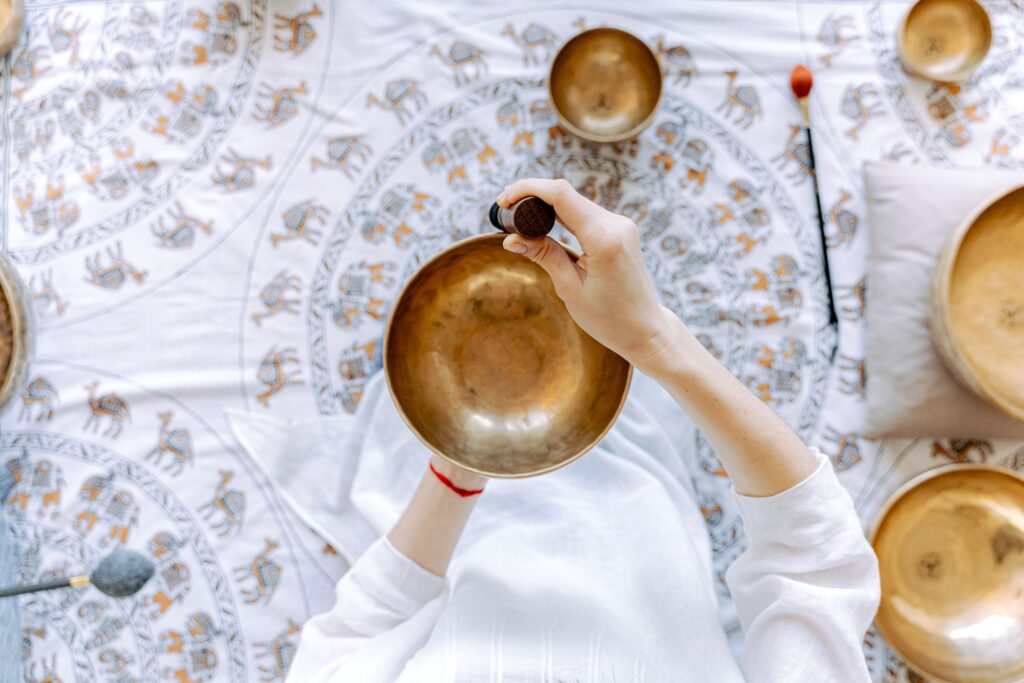
Among all the tools used in this practice, singing bowls are easily the most recognizable and widely loved. Experiencing sound bowl healing is unique because you actually feel it vibrating through your chest and limbs. The two most popular types of bowls offer distinct therapeutic benefits.
Tibetan Singing Bowls
Crafted from traditional metal alloys, Tibetan singing bowls produce complex, multi-tonal overtones. When struck or rubbed with a mallet, they generate physical vibrations that can be felt in close proximity, offering both an auditory and tactile sensation that helps ease muscle tension and promote psychological well-being [2].

Crystal Singing Bowls
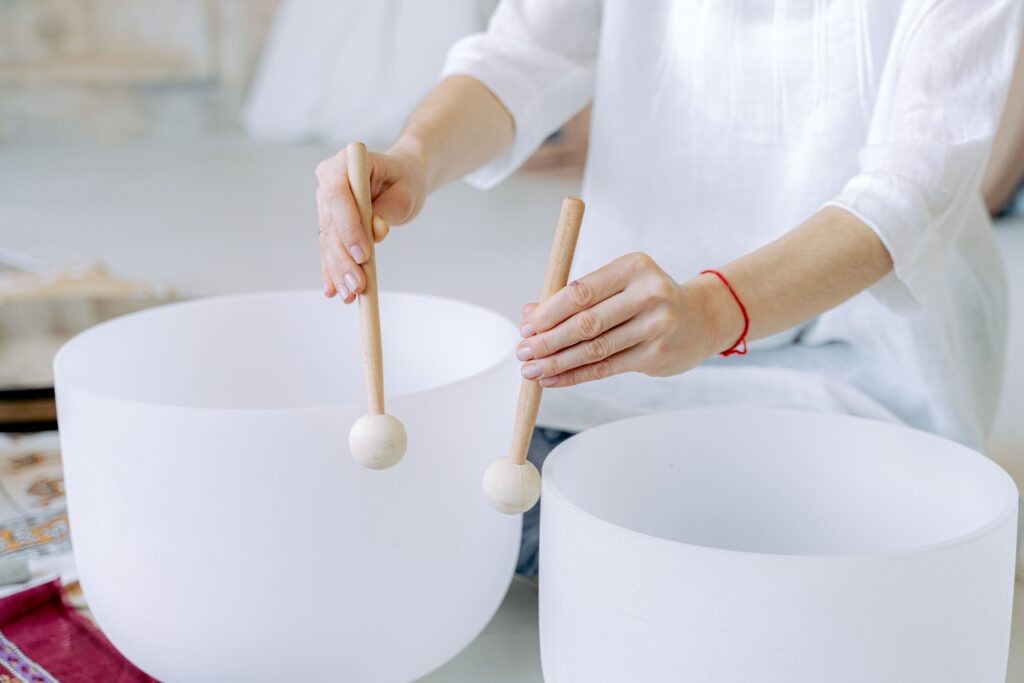
Made from 99.9% pure quartz crystal, these bowls are tuned to precise musical notes that correspond with specific energy centers in the body. Crystal singing bowls emit an incredibly clear, piercingly pure tone that rings out for a long time. The high-clarity sound waves are exceptionally good at cutting through mental chatter, making them ideal for relieving acute anxiety and clearing a fogged mind.
Other Power Tools in the Sound Healing Universe
While singing bowls get a lot of attention, a truly comprehensive acoustic therapy session often incorporates other ancient instruments, each serving a unique neurological purpose.
Gongs
Gongs produce an incredibly vast and unpredictable wall of sound. Because the acoustic output is so rich and complex, the human brain can’t categorize or predict the next note. This beautiful overwhelming force completely short-circuits your internal monologue. The moment the gong takes over, your racing thoughts simply give up, allowing you to drift into a dreamlike state almost instantly.

Tuning Forks
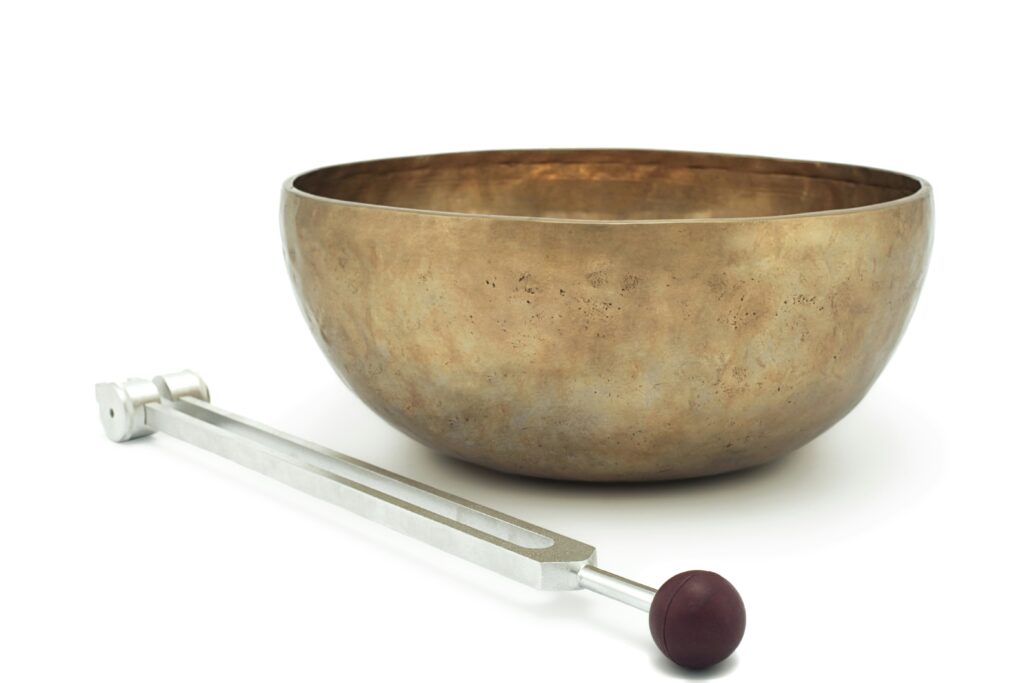
If gongs are a wide blanket of sound, tuning forks are a laser beam. These metal forks are calibrated to precise frequencies, such as the famous 528 Hz or 432 Hz tones. Practitioners strike the fork and place the vibrating stem directly onto specific acupressure points or joints on your body. This acts like a form of acoustic acupuncture, directing targeted healing vibrations exactly where your body holds physical trauma or stiffness.
A Beginner’s Guide: How to Experience Sound Healing Safely
Getting started with this wellness practice is remarkably simple, and you don’t need any special skills or prior experience to benefit from it.
The most immersive way to begin is by booking a local sound bath event. During a typical session, you simply lie down comfortably on a yoga mat with blankets and pillows while a practitioner plays various instruments around the room. All you have to do is close your eyes and let the sound wash over you.
If you can’t find a local studio, you can easily practice at home. Put on a pair of high-quality headphones, find a quiet space to lie down, and listen to high-fidelity tracks dedicated to acoustic therapy.
While the practice is incredibly safe for the vast majority of people, there are a few important exceptions. Because the physical vibrations can be quite intense, individuals with cardiac pacemakers, metal implants, or severe epilepsy should consult with a doctor before attending an in-person session. Pregnant individuals should also avoid having heavy singing bowls placed directly on their body.
Conclusion
In a culture that constantly demands your attention and forces you to grind through exhaustion, finding true stillness can feel like an impossible task. Learning about sound healing reminds us that sometimes the best way to heal the mind is by allowing ourselves to receive.
Taking an hour out of your week to immerse yourself in therapeutic frequencies is a highly effective, intelligent form of modern self-care. By letting these ancient tools do the heavy lifting for your nervous system, you can quiet the external noise and finally step back into a space of genuine peace.
References
[1] Thaut, M. H. (2005). Rhythm, Music, and the Brain: Scientific Foundations and Clinical Applications. Routledge. https://www.routledge.com/Rhythm-Music-and-the-Brain-Scientific-Foundations-and-Clinical-Applications/Thaut/p/book/9780415973700
[2] Goldsby, T. L., Goldsby, M. E., McWalters, M., & Mills, P. J. (2017). Effects of Singing Bowl Sound Meditation on Mood, Tension, and Well-Being: An Observational Study. Journal of Evidence-Based Complementary & Alternative Medicine, 22(3), 401-406. https://doi.org/10.1177/2156587216662264
Related Articles
Sound Bath Meditation for Couples: How to Cure Relationship Anxiety
