





Is your relationship dying of boredom? If your daily routine feels less like a partnership and more like a predictable script, you’re just too comfortable. Most people think peace is the ultimate goal, but absolute predictability is a romance killer.
The secret to keeping the spark alive is the presence of the right kind of pressure. In psychology, this is called the eustress definition. It’s the positive anxiety that turns a stale habit into an exciting adventure. By intentionally using specific eustress examples, you can stop the “roommate phase” and rewire your brain to feel that first-date rush all over again. Here’s how to use healthy stress as the ultimate romantic fuel.
What Is the Scientific Eustress Definition?
The Good Kind of Stress
When you strip away the clinical jargon, the eustress definition is simply a positive, short term form of stress that creates feelings of excitement, focused attention, and high energy. Instead of paralyzing you, it pushes you forward.
From a biochemical standpoint, when you experience this type of healthy pressure, your body releases a potent cocktail of adrenaline and dopamine. In a romantic context, this exact neurological cocktail mirrors the early stages of infatuation. It’s the physical rush that makes your heart race, your palms sweat, and your focus sharpen entirely on the person in front of you. You’re anxious because you care intensely about what’s happening.
The Inverted-U Theory: Finding the Sweet Spot
To understand why this matters for couples, look at the Yerkes-Dodson Law, also known as the Inverted-U Theory of stress.

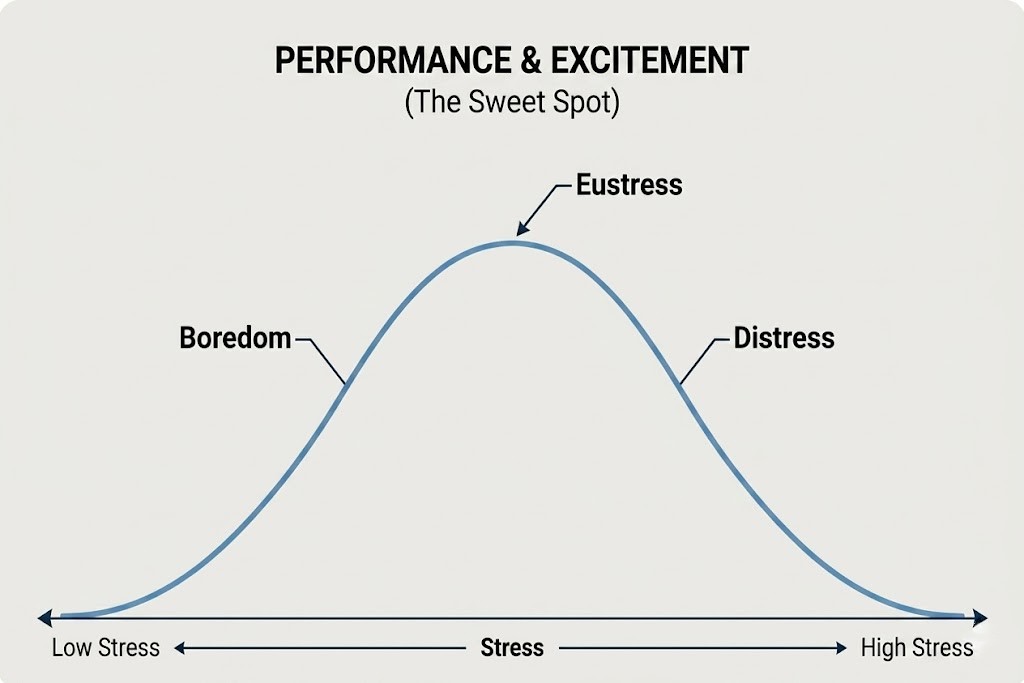
Too little stress: You slide into pure boredom and apathy.
Too much stress: You hit distress meaning territory, where chronic anxiety and fights destroy the bond.
The sweet spot: This is Eustress. It’s the perfect middle ground where the relationship is stimulated just enough to stay vibrant without tipping into chaos.
7 Creative Eustress Examples to Spark Romance in Your Relationship
Level 1: Micro-Eustress (Small Daily Sparks)
1. The Blind Date Effect
Break the routine of your regular date nights by adding a layer of mystery. Pick a location but don’t share the address with your partner, or tell them exactly what time to meet you at a specific spot without revealing the plan. You can even send a text saying: “Wear something elegant, a car is picking you up at seven.” The hours spent anticipating the unknown creates a brilliant eustress example that turns a basic dinner into an event.
2. Deep Vulnerability Questions
True intimacy can feel incredibly scary. Sit down together and play a game using deep, structured prompts, like the famous 36 questions that lead to love. That slight tightness in your chest before answering a highly personal question or revealing a hidden insecurity is an emotional eustress example. It forces you to drop your social armor and rewards you with a massive wave of closeness once the answers are shared.
Level 2: Adventure Eustress (Shared Physical Thrills)
3. Adrenaline Dates
Plan a date centered around a healthy, controlled scare. Go to an amusement park and hit the highest roller coasters, book a high-stakes escape room, or watch an intense horror film at the theater. When your brain processes this physical rush, a fascinating psychological phenomenon called the misattribution of arousal takes place. Your body experiences a pounding heart and a surge of adrenaline from the activity, but your subconscious mind attributes that intense physical excitement directly to the person sitting next to you.

4. Getting Lost Together
Pick a nearby city, a sprawling state park, or an unfamiliar neighborhood and explore it together without opening Google Maps. Intentionally allow yourselves to drift. Navigating an unfamiliar space, figuring out which turn to take, and solving the minor puzzle of finding your way back as a unit turns potential irritation into a fun, collaborative challenge.
Level 3: Growth Eustress (Stepping Up Together)
5. Learning a New Skill
Sign up for a class where both of you are absolute beginners. Take a high-energy cooking class, a complex pottery workshop, or a passionate Tango lesson. Stepping into an environment where you’re both clumsy, out of your element, and laughing at your own mistakes creates a beautiful shared vulnerability. You watch each other struggle, adapt, and eventually succeed, which refreshes how you view your partner’s capabilities.
6. The 30-Day Relationship Challenge
Set a specific, structured boundary for your relationship for a set period. Try a challenge where you commit to thirty days of zero phone usage when you’re eating dinner together, or a month where you must perform one unexpected act of service for each other every single day. The discipline required to break old habits introduces a healthy friction that keeps you highly intentional about how you treat each other.
7. Stepping into Big Milestones
Don’t shy away from major life steps just because they bring a wave of anxiety. Planning to move in together, booking your first long-distance trip abroad, or arranging the first formal dinner to meet each other’s extended families are powerful eustress examples. These moments represent high-stakes pivots. The nervous energy you feel is the exact type of positive pressure that, once conquered together, cements your trust and locks in a permanent core memory.


Why Couples Who Chase Eustress Together Stay Together
| When You Share Eustress | The Deep Impact on Your Bond |
| Breaking the Habitual Routine | It injects novelty into your lives, overriding the brain’s tendency to take your partner for granted by constantly updating your mental map of them |
| Building Trust Through Action | When you solve an escape room or survive a tough hike, you physically witness your partner’s reliability, problem-solving skills, and composure under pressure |
| Amplifying Intimacy | The biological responses to positive stress, like a racing pulse and warm skin, naturally transition into heightened romantic attraction and desire |
A Warning: Don’t Let Your Eustress Turn into Distress
While playing with positive tension is incredible for romance, you have to monitor the boundary lines closely. There’s a sharp distinction between eustress vs distress, and it’s easy to accidentally cross it if you aren’t paying attention.

For instance, a friendly, competitive game night can turn into a genuine distress meaning situation if one partner starts genuinely insulting the other or taking the competition too seriously. An adventure date like rock climbing can quickly degrade into toxic pressure if one person is genuinely terrified of heights and feels pressured or mocked.
The golden rule for keeping stress positive is absolute consent and a deep respect for each other’s comfort zones. Always check in, keep the communication completely open, and scale back the intensity if a challenge stops feeling like an exciting adventure and starts feeling like an exhausting test.
Conclusion
A perfectly placid, unchanging relationship might sound safe, yet absolute predictability is often where romance goes to die. Loving someone over the long haul takes an active, conscious effort to keep the narrative interesting. Don’t be afraid of a little tension. Pick a fresh challenge, step away from your comfortable patterns, and use the power of healthy eustress to remind yourselves why you fell in love in the first place.
Are the pressures in your life feeling less like an exciting spark and more like a heavy, exhausting burden?You might be dealing with something far more damaging than everyday relationship adjustments. Read our comprehensive guide Eustress vs Distress: 7 Signs Your Love Stress is Healthy to find out exactly where your relationship stands.


