





You’ve probably read the theory. Nature wires you; nurture shapes how you use that wiring. However theory clicks differently when you’re staring at a specific habit in yourself or your partner and finally understand where it actually came from. These 25 nature vs nurture examples are meant to do exactly that: turn an abstract debate into something you can recognize in your own relationships.
Category 1: Chemistry and Attraction (Genetics at Play)
These first 6 nature vs nurture examples sit firmly in biological territory, though as you’ll see, even pure chemistry has a backstory.
1. Scent Preference And MHC Genes
That inexplicable pull toward someone’s natural scent is rooted in your major histocompatibility complex (MHC), a set of immune system genes that signal genetic compatibility. Research from the University of Bern found that people are consistently more attracted to the natural body odor of those with a different MHC profile, essentially driving us toward partners whose immune systems complement our own. You don’t think about it. Your nose just knows, and your genes wrote the preference.
2. Intensity Of Infatuation (Hormone Receptors)
Some people fall hard and fast, consumed by a new connection in a way that genuinely disrupts sleep and focus. Others describe the early stage of love as exciting but manageable. A lot of that difference comes down to receptor sensitivity: how strongly your brain’s dopamine and oxytocin receptors respond to new attachment stimuli. It’s heritable. Two people can experience the exact same relationship and live completely different internal worlds.
3. Tendency Toward Monogamy Vs Novelty-Seeking
The AVPR1A gene, sometimes called the bonding gene, affects vasopressin receptor distribution in the brain. Variations in this gene have been linked to differences in partner fidelity, emotional closeness, and the pull toward sexual novelty. This does mean two people can enter a committed relationship with meaningfully different baseline drives, and neither is simply choosing to be difficult.

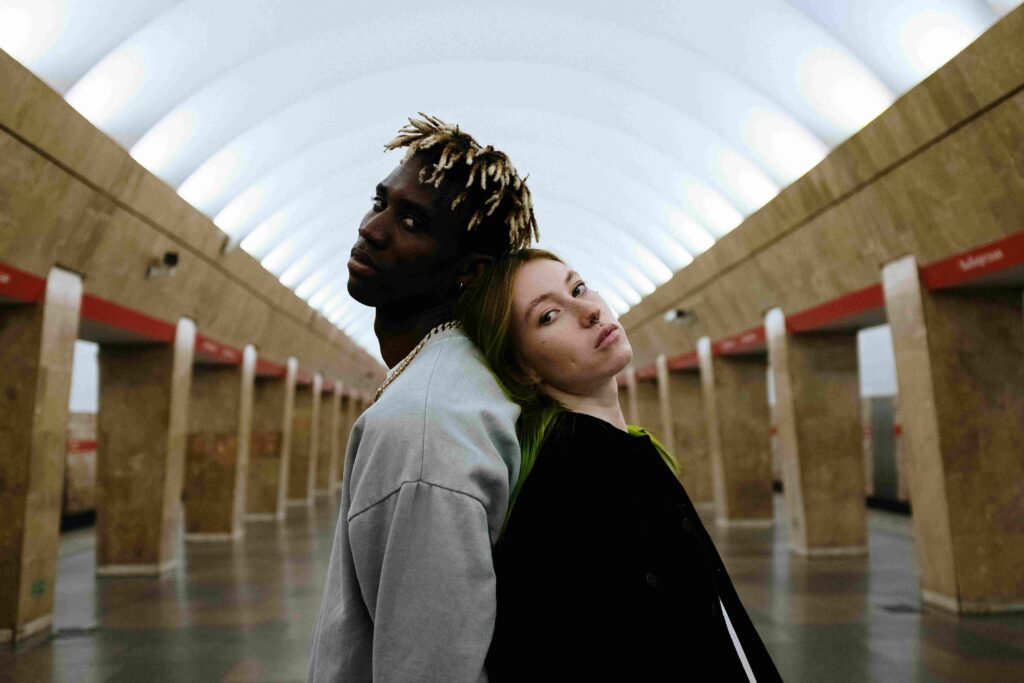
4. How Quickly You Fall (Neurological Reflex Speed)
The speed at which someone forms a romantic attachment has real neurological underpinnings. For some people, the brain’s reward circuitry activates quickly and strongly in response to a compatible person. For others, that process is slower and more deliberate. This is how your nervous system was built to process new social bonds, and it affects everything from how early you say “I love you” to how long it takes you to feel truly safe with someone.
5. Rejection Sensitivity
Rejection sensitivity, the degree to which your emotional system spikes in response to perceived rejection or exclusion, has a clear genetic component. People with higher baseline sensitivity aren’t overreacting for attention. Their nervous system is genuinely louder on that frequency. Carried into romantic relationships, this can look like reading abandonment into unanswered texts or needing more reassurance than a partner knows how to give.
6. Physical Touch Drive
The need for physical affection as a source of comfort and connection varies significantly between people, and genetics plays a role. Some brains are wired to release more oxytocin through touch, making physical closeness feel essential rather than optional. When a high-touch person partners with a low-touch person, it often reads as a mismatch in care or interest. It’s frequently a mismatch in biological baseline.
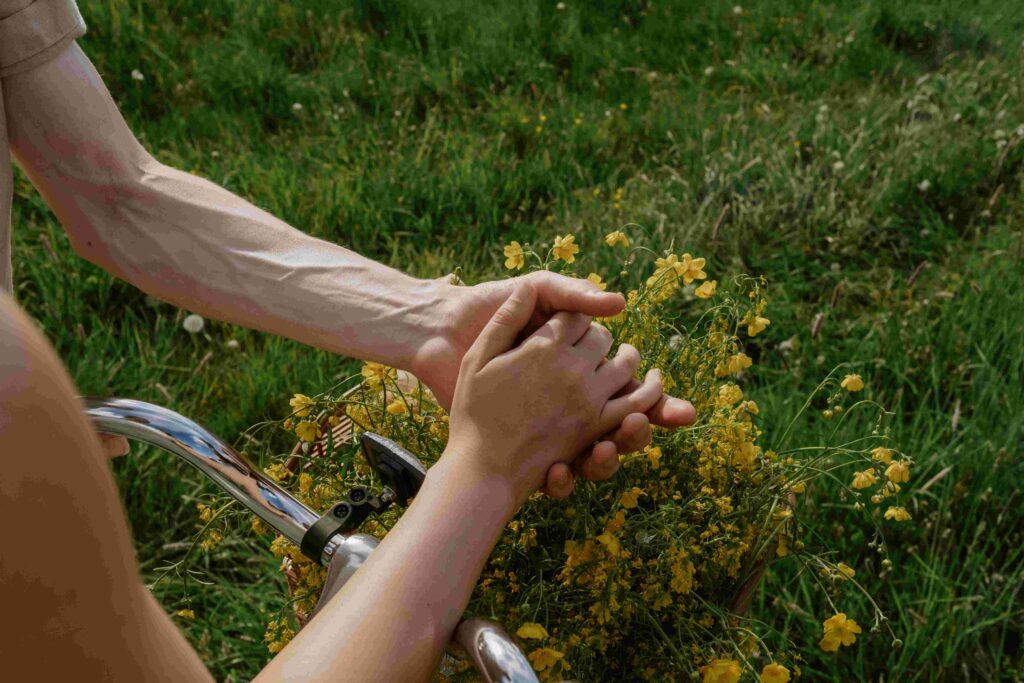
Category 2: Relationship Habits and Communication (The Power of Nurture)
These 7 examples are almost entirely learned. They’re where your upbringing quietly became your relationship personality.
7. How You Handle Conflict
Watch two people argue and you can often guess what their childhood dinner table looked like. Did your parents raise their voices and then laugh it off an hour later? Did they go cold and silent? Did one always apologize first, even when they weren’t wrong? Every relational conflict style you saw modeled growing up became a candidate for your default setting. The good news is it isn’t fixed. The hard news is it takes real awareness to even see it.
8. How You Show Care
One person buys gifts when they want to express love. Another cooks a meal. Another checks in with texts throughout the day. These are translations, you learned to express care in the language that felt like care when you were young. If your mother showed love through cooking, there’s a decent chance that’s how you reach for it when someone you love is struggling.
9. Your Relationship With Money As A Couple
Whether finances feel like a shared project or a private battleground in a relationship is heavily shaped by what you absorbed growing up. Did money in your household signal security or stress? Was it discussed openly or treated as a source of shame? Two people can love each other deeply and still have completely incompatible frameworks around financial transparency, saving versus spending, or whether one person’s income belongs to both. Those frameworks were built slowly, year by year, in the house you grew up in.


10. How You Define Personal Space
What counts as enough alone time in a relationship is culturally and familiarly conditioned. If you grew up in a home where everyone operated independently, togetherness might feel crowding quickly. If your family spent most waking hours in shared space, a partner who regularly retreats to a separate room might feel like an emotional distance. These interpretations are learned, and they collide constantly in shared living.
11. How You Respond To Your Partner’s Stress
When someone you love is overwhelmed or struggling, your instinct is to either move toward them, try to fix it, give them space, or sometimes panic a little yourself. These responses track closely with the emotional climate you were raised in. If stress in your family meant someone needed to manage it quietly or everyone suffered, you probably learned to make yourself scarce when tension rises. If your family moved toward each other in difficulty, closeness under pressure feels natural.
12. Standards Around Shared Responsibilities
Expectations about division of labor, cleanliness, and domestic effort are absorbed early and feel far more obvious than they are. Most people genuinely believe their baseline is reasonable, because it matches what they grew up seeing. Conflict around chores and household standards is almost about two people with different inherited definitions of normal trying to build one shared life.
13. How You Navigate Family Boundaries
Whether you expect your partner to spend every holiday with your family, whether you share relationship details with your mother, whether a parent’s opinion on your relationship carries actual weight: all of this is shaped by the enmeshment or separation norms of the family you came from. Close or boundaried families aren’t inherently healthier, however when two people come from opposite ends of that spectrum, the friction is real and it runs deep.

Category 3: Attachment Styles and Emotional Safety (The Intersection of Both)
This is where nature and nurture get genuinely hard to separate. Attachment style is perhaps the clearest example of how biology creates a predisposition that early experience then shapes into something specific.
14. Anxious Attachment
People with anxious attachment tend to monitor relational signals closely, worry about their partner’s availability, and need more reassurance than their partner may understand. The biological piece is a more reactive stress response system, which some people are simply born with. The nurture piece is usually early caregiving that was inconsistent: present sometimes, unavailable others, leaving the child’s nervous system in a state of never quite knowing what to expect. In adulthood, that uncertainty gets transferred onto romantic partners.
15. Avoidant Attachment
Avoidant attachment looks like emotional self-sufficiency that tips into walls. The person who pulls back when things get close, who feels genuine discomfort when a partner needs too much, who’s easier to love when there’s distance. Again, there’s often a temperamental baseline: lower innate need for social closeness. But avoidance is also frequently a learned response to emotional needs that were consistently unmet or dismissed in childhood. If reaching for connection reliably didn’t work, stopping reaching starts to make perfect sense.
16. Ability To Trust New Partners
How quickly and fully you’re able to trust someone new in a relationship is shaped by both cortisol reactivity (a biological stress marker) and by your history of having trust honored or broken. Someone who’s experienced repeated betrayal by people who were supposed to be safe have an accurately calibrated nervous system doing its job.
17. Jealousy
Jealousy has a genetic floor. The possessive drive exists in most humans and has evolutionary roots in mate-guarding behavior, however the intensity, the triggers, and the way jealousy gets expressed in a relationship are almost entirely shaped by experience: past betrayals, the relational models you grew up watching, and whether you’ve built a secure enough sense of self that a partner’s outside friendships don’t feel like a threat to your place.

18. Vulnerability And Emotional Openness
Some people find emotional disclosure genuinely easy. For others, it takes sustained effort and still feels risky every time. Temperament plays a role here: sensitivity to social judgment varies by neurobiology. The bigger factor is almost always learned: was vulnerability met with care or with criticism when you were young? Was showing emotion safe, or did it invite shame? The answer to those questions becomes the wall or the door you bring into every relationship.
19. How Long It Takes To Recover From Heartbreak
There are meaningful individual differences in how intensely people experience romantic loss and how long it takes to restabilize. Some of that is genetic: variation in serotonin and dopamine reuptake affects how deeply and durably emotional pain registers. Some of it is the relational history you carry: whether you’ve built a secure internal base that the loss can’t fully dismantle, or whether one relationship ending triggers a much older wound.
20. Need For Affirmation From A Partner
The degree to which you rely on a partner’s approval, praise, or validation to feel okay varies significantly and isn’t a character flaw in either direction. Some of it is temperamental: people with higher sensitivity to social feedback are simply built that way. A lot of it is conditioned by whether admiration and affirmation were reliable or unpredictable in your early environment. When you never quite knew if you’d done enough to be loved, you keep checking.

Category 4: Modern Dating Context and Relationship Expectations
The final 5 nature vs nurture examples are distinctly contemporary, shaped by the unique relational landscape of the current era.
21. Patience In The Talking Stage
The ambiguous pre-relationship phase of modern dating, where 2 people are clearly something but haven’t named it, maps neatly onto attachment style. Someone with secure attachment can usually sit in that uncertainty without it feeling threatening. Someone with anxious attachment often finds the undefined stage genuinely destabilizing: the brain reads ambiguity as potential rejection and starts working overtime. Your tolerance for the talking stage is a nervous system report.
22. Relationship With Dating Apps
How someone approaches swiping, matching, and the general logic of app-based dating is shaped partly by personality traits with genetic components (openness to novelty, approach versus avoidance tendencies) and partly by what love was modeled as growing up. People who watched their parents in a long-stable partnership often find the transactional feel of apps deeply uncomfortable. People who grew up in environments where relationships felt unpredictable may find the sense of control and optionality that apps provide genuinely soothing.
23. Romantic Expectations Shaped By Media
This one is almost entirely nurture. The expectation that love should feel cinematic, that the right person will intuit your needs, that conflict signals incompatibility rather than normal human friction: these beliefs are largely installed by the films, shows, and social media you consumed during your most formative years. The nature vs nurture examples that come from cultural conditioning are sometimes the hardest to spot, because they feel like values rather than influences.

24. The Concept Of A Platonic Soulmate
Whether someone views a close opposite-gender friendship as a normal, healthy part of adult life or as a structural threat to their romantic relationship tracks closely with what they absorbed about gender, intimacy, and exclusivity in their upbringing. The need for a primary attachment figure is hardwired. Which relationships are allowed to fill that role is entirely constructed.
25. Long-Term Partnership Vs. Freedom-First Orientation
Whether someone orients toward building a stable long-term partnership or toward maintaining independence and freedom as a primary value has both genetic and environmental fingerprints. Oxytocin receptor genetics influence the pull toward pair bonding. However family scripts about what marriage looks like, whether it’s worth it, whether people reliably stay, shape how willing someone is to move toward that pull. Someone who grew up watching love fail often doesn’t fear commitment as much as they’ve learned to protect themselves from it.
Conclusion: Reading the Blueprint of Your Romantic DNA
These 25 nature vs nurture examples are to create a little more space between stimulus and response. To recognize that the way you love has a logic, and once you can see the logic, you have more choices about what to do with it. Some of what’s here will land like recognition. Some of it might land like relief. A few might land like an uncomfortable mirror. All of it is worth sitting with, ideally with the person you’re trying to build something with, because the more clearly two people can see their own blueprints, the better they’re able to design something that actually fits both of them.
If you’re still orienting to the bigger picture, the pillar piece on Nature vs Nurture in Love: Are We Born to Love or Taught How? covers the science and framework behind everything you’ve just read.


