





There is a kind of exhaustion many parents carry that has little to do with sleep or schedules. It takes shape slowly, through emotions they never asked for, yet learn to hold as if they were responsible for them.
Children don’t explicitly ask their parents to absorb their fear, confusion, or disappointment. Instead, these emotions emerge through proximity, as they instinctively turn to the same adult when something feels uncertain. It becomes a quiet assumption: this is where heavy feelings are meant to go.
Most parents accept that role instinctively. They become the place emotions land, without pausing to ask what stays behind. Over time, this emotional weight accumulates. It settles quietly, through the repeated act of being the one who listens, steadies the moment, reassures, and continues on without ever pausing to name the cost.
When Support Turns Into Silent Absorption
Many parents believe that being emotionally available means taking everything in. They listen fully, respond carefully, and try to contain their child’s distress so it doesn’t spill outward. At first, this feels like love in action: being the safe place, the one who can absorb it all and keep things steady.
But emotional support and emotional absorption aren’t the same thing. Support gives feelings somewhere to move, while absorption slowly concentrates them in one place. When parents repeatedly take on emotions without boundaries, they begin to carry fear that doesn’t belong to them, worry that isn’t theirs to solve, and responsibility that was never meant to be assumed.
The emotional work doesn’t disappear; it simply shifts, still present but no longer in the same place. Gradually, parents begin to notice subtle changes that are hard to explain.
There’s a tightening in their chest when they hear their child’s footsteps, a quiet dread before conversations that used to flow easily, and a mounting sense of depletion that doesn’t seem to align with the moment. Nothing obvious feels ‘wrong,’ but somehow, the weight of it all feels heavier than it should.
Children Sense More Than Parents Realize

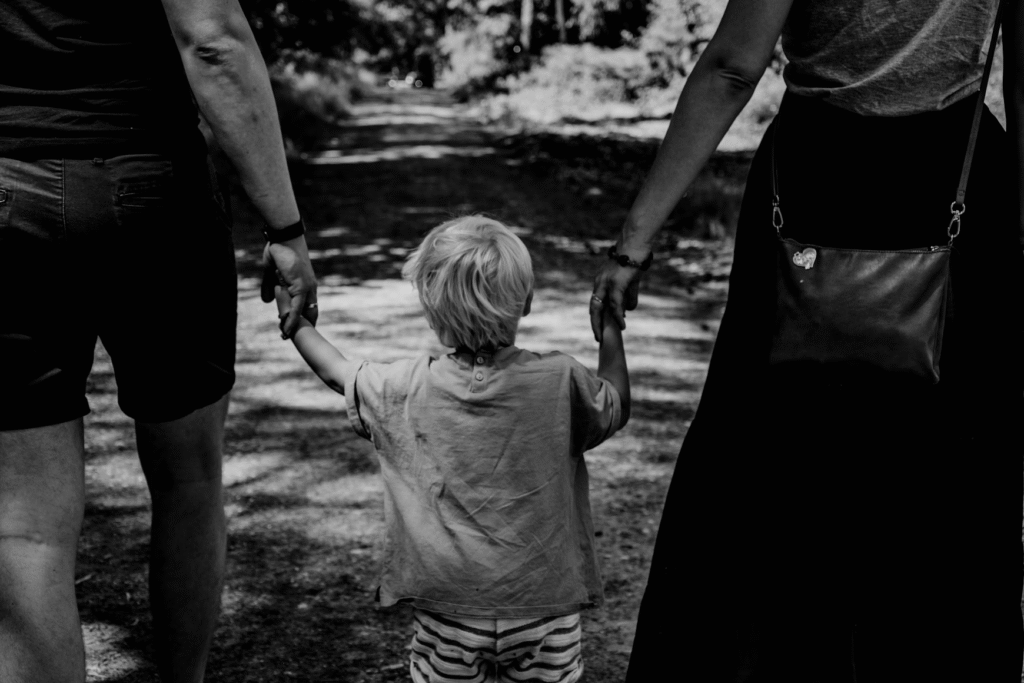
Children may not fully grasp emotional boundaries, but they’re deeply attuned to the emotional atmosphere around them. They can sense when a parent’s energy is depleted, when reassurance feels tinged with strain, and when listening carries the weight of unspoken overwhelm.
This awareness can create its own quiet burden. Some children begin to limit what they share, while others feel anxious, sensing that their emotions might not have a safe place to go. Many internalize the idea that emotions need someone else to carry them, believing it isn’t something they can learn to hold and move through on their own.
Parents don’t fail in this. Children learn emotional patterns naturally through their relationships, even before they can put them into words. When parents absorb emotions instead of guiding them, children miss the chance to build emotional independence. They receive comfort, but not the strength needed to navigate their own feelings.
The Unspoken Cost to Parents
Carrying unrequested emotional weight doesn’t remain confined to parenting moments. It begins to spill over into the body.
Parents often describe unexplained headaches, irritability, and difficulty sleeping, alongside a deep love for their children. There’s also a sense of emotional numbness that accompanies these feelings. They feel guilty for wanting space, ashamed for feeling resentful, and confused by the gap between how much they care and how depleted they feel.
This internal conflict is rarely named out loud. Many parents assume this exhaustion is simply part of the job. They tell themselves it’ll pass, that they should be able to handle it, that needing distance means something is wrong with them.
Emotional overload is often a sign that the balance between holding, teaching, supporting, and containing has shifted, sometimes without notice.
Boundaries Aren’t Withdrawal
Setting emotional boundaries means redefining how emotional responsibility is shared, which allows for healthier connections without becoming emotionally distant.
A parent can listen without needing to solve the problem. They can validate feelings without carrying the emotional weight. They can stay present while allowing a child to face discomfort, which fosters growth.
This kind of boundary is often subtle. It emerges through pauses instead of explanations, through curiosity instead of offering immediate reassurance, and by helping a child name their feelings without rushing to make them go away.
Children need parents who can model how emotions are carried, expressed, and released in a balanced way, helping them navigate feelings without the weight becoming overwhelming. When parents protect their own emotional capacity, they preserve the relationship itself.
What Children Actually Need
Children need safety and adults who remain steady, not overextended. They need guidance that shows feelings are manageable, not burdens to be passed on.
When parents stop carrying emotions that weren’t theirs to hold alone, children learn an important lesson. They discover that emotions belong to the person experiencing them. They learn that support doesn’t mean removing all discomfort, and that connection can endure through challenging feelings.

This is how resilience forms quietly, inside ordinary moments.
Carrying Less, Holding Better
Parenthood requires emotional labor, but it’s important to remember that emotional weight doesn’t need to be carried alone or silently. When parents begin to notice what they’re carrying instead of automatically absorbing it, a shift occurs. The relationship lightens. The parent reclaims energy. And the child is given space to grow.
Children don’t want their parents to disappear beneath the weight of their feelings. They want a presence that endures. However, emotional weight doesn’t have to be carried in silence or entirely on your own.


